Categories
How to maintainance artificial sports turf

How to maintain artificial turf after snow

With the deepening of winter, many areas have been covered with heavy snow. Snow is certainly a beautiful scene, but snow will have varying degrees of impact on people’s daily life and physical exercise.
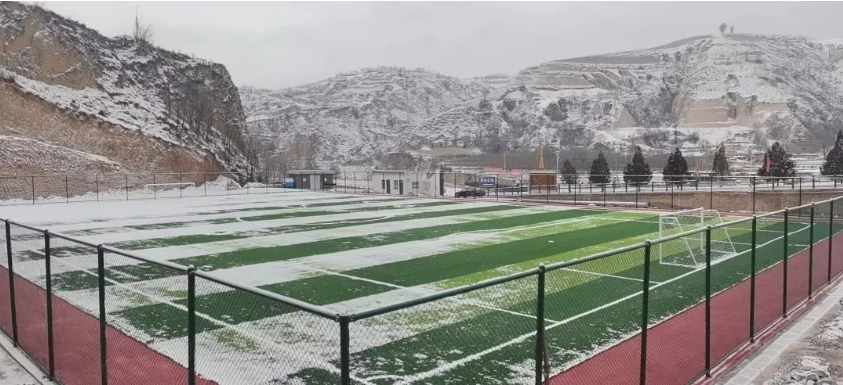
As we all know, the raw materials of artificial turf are weather-resistant, and the cold and hot temperatures will not affect the service life of artificial turf. Under normal circumstances, the snow and ice covering the artificial turf will melt and evaporate or be discharged out of the field as the temperature warms up. With the intensification of the cold weather in the north, it becomes almost impossible for the ice and snow covering the lawn to melt and evaporate by itself, so these outdoor artificial lawns will inevitably be frozen into “ice grass” and become fragile and easily broken. The site should not be used before the ice and snow melt, otherwise, the grass will be damaged and the service life of the lawn will be affected.

At this time, the maintenance of artificial turf is particularly important. This article describes in detail how to maintain artificial turf covered by ice and snow.

1. Clearing machine/snowblower

If the snow is dry like powder, it can be removed from the playing field with a snow blower or a rotating brush, being careful not to sink the machine deep into the grass fibers when using it.

2. Remove with a rubber-scraping snow plow

Snow On sports fields, it is easier to remove wet or heavy snow with a snow plow.

3. Ice removal

If the artificial turf freezes, the ice on the field can be crushed with a heavy-duty roller, and the broken ice can be swept directly from the field. Usually when the sun is out, and when the ice or frost is not very thick, it will melt away quickly. The bottom fabric of artificial turf has drainage holes, and the snow will be drained from the drainage holes after melting. Finally, you only3. Ice removal needs to pay attention to the foundation. angle and treatment of the gutters.

If the ice is thick, chemicals can be used to cause it to melt. Spread about 100 Ibs of urea per 3,000 square feet (for reference only, it can be adjusted appropriately in different situations and different areas) After the urea is spread, it will take half an hour for the ice cubes on the field to melt. Melted ice should be cleaned with a washer, rubber cleaner, sweeper, or other suitable equipment. Urea has little effect at -12°C, and cannot melt ice at all at -17°C. A small amount of urea residue will remain on the site, which will be cleaned up, weather permitting.

Do not use salt, mineral salt, calcium chloride, or other corrosives and toxic chemicals to melt the ice on the surface of artificial grass, their residues will cause damage to athletes, equipment and turf.

The above are the common methods for removing ice and snow from artificial turf.
Categories
How to maintainance artificial sports turf

5 ways to maintain an artificial sports turf field

Tens of millions of artificial turf sports fields are constructed every year in the world. It is very important to prolong the service life of sports fields as much as possible through active and effective maintenance. Improper maintenance will seriously shorten the service life of artificial turf. According to the data obtained by the international professional sports field testing laboratory and FIFA, if the artificial turf field is not maintained enough or lacks maintenance, the increased wear, and tear of the product will lead to the early failure of the artificial turf field warranty, shorten the service life, and increase the number of sports activities. And many adverse consequences of the use of safety hazards.

Regarding the maintenance and maintenance of artificial turf fields, the following aspects can be carried out.

Basic requirements

Try to keep the site as clean as possible, erect a “no smoking” sign around the grass, do not allow motor vehicles and heavy objects to enter the sports field, reduce the number of cleanings, avoid cleaning when the temperature is high, set up enough trash cans, control the use of the site, and find small Damage should be repaired in time.

Cleaning and maintenance

1. Use a vacuum cleaner to clean paper, fruit shells, and other debris in time after the game.

2. Comb the grass seedlings with a special brush every two weeks to remove the dirt and leaves on the lawn.

3. Use a special target to level the quartz sand and rubber particles once a month or after frequent games (football field).

4. When it is hot in summer, you can spray the lawn with water to cool down, so as to make the athletes cool and comfortable.

The removal of stains

1. “Water-like” stains such as juice, milk, ice cream, and blood stains: first scrub with soapy water, then rinse the place with soapy water for a long time with clean water; if necessary, dry it with a strong absorbent towel.

2. Oily stains such as shoe polish, sunscreen oil, ballpoint pen oil, etc.: can be wiped with a sponge dipped in perchloroethylene, and dried with a towel with strong adsorption; nail polish: can be wiped with acetone.

3. Paraffin, asphalt, and asphalt: Wipe vigorously or wipe with a sponge dipped in perchloroethylene.

4. Paints, coatings, etc.: Can be wiped off with turpentine or paint, and decontaminated with detergent and water. Rinse the cleaner with cold water and wipe vigorously, using a sponge dipped in perchloroacetic acid.

5. Chewing gum: spray freon into small pieces and then remove the residue.

Fill maintenance

1. The scouring and cleaning of heavy rain will cause a small amount of filler loss. The place to be filled can be sprinkled with quartz sand, and rubber granules, and completely swept into the turf (football field).

2. Carefully check whether the suture is loose and whether there is damage, tearing, burning, etc. at the bottom of the entire turf. If you find a large area of ​​repair, you should contact the paving company in time.

Prohibited items

1. Smoking, setting off fireworks, and welding in the venue.

2. Throwing chewing gum, fruit peel snacks, fruit juice drinks, and oil stains on the field.

3. Cars, motorcycles, and other vehicles and heavy objects enter the site.

4. Use inappropriate shoes or sports machineries such as spikes and javelins.

5. Use chemical cleaners, herbicides and pesticides.

The maintenance and upkeep of the artificial turf field are a must. Proper maintenance of the artificial turf field can not only effectively prolong the service life of the field and make it meet the warranty requirements of the lawn builder and lawn provider, but also maximize the life of the artificial turf field. Beautify the appearance of the venue, improve sports comfort, ensure the quality and safety of various sports in the venue and reduce venue management risks.

Get Your FREE Turf Sample & Quote Today – Experience Quality Before You Buy!