If you agree with the prospect of artificial turf and want to sell our products directly in your country or region, we can try to negotiate with us.
working together
As the world’s factory, China, with its highly mechanized production, mature technology, complete supporting factories and fast logistics, can provide products to everyone, every region, and the world without any suspense. With its huge price advantage, Stable and reliable quality, if you become our agent, not only will we provide you with support, it is equivalent to having a world factory, you only need to manage the sales team to make money, everything becomes simple.
The development of artificial grass has a history of more than 60 years. It first originated in the United States. At that time, because the natural grass under the roof could not grow, in order to solve this problem, artificial turf was developed. Since then, artificial turf has spread from the United States to the world, forming a market situation of American grass, European grass, Australian grass and Asian grass, and American grass has stronger market competition due to its long history, advanced materials and technology force. Artificial grass fields have great advantages and will undoubtedly be used more and more commonly.
In many countries in the world, due to the influence of factors such as different geographical locations, extreme natural conditions and their respective economic conditions, and also because of the objective fact that a considerable number of natural grass fields must be equipped with roofs and other facilities, natural grass installation and maintenance becomes more difficult. It is under such specific conditions that synthetic grass shows its great advantages. After a long period of development, artificial grass technology has become relatively mature, and many technical indicators have been close to natural grass, which can meet the technical requirements of professional football games on the surface of the playing field.
In this context, in 2001, FIFA introduced the “FIFA Recommended” quality certification system. UEFA and many football associations responded immediately and arranged more and more international competitions to be held on artificial turf. On February 28, 2004, at the 118th annual meeting of the FIFA Council held in London, England, FIFA passed a resolution to allow the use of artificial turf in professional competitions. In August 2005, FIFA and UEFA unified the “testing and certification standards for football pitches” and launched a higher standard FIFA two-star standard test, agreeing that the World Cup finals can be played on artificial turf pitches that meet the above standards. held above
The recommendation and green light of artificial turf by various international football institutions and sports departments has provided favorable conditions for promoting the popularization and application of artificial turf in hot regions, alpine regions and those countries and regions whose economic conditions are not suitable for planting natural grass. .
With the development of the market, artificial grass has undergone great changes in materials, technology, construction, etc. The purpose of these changes is to make artificial grass closer to natural grass in terms of sports performance, which can be roughly divided into the following stages :
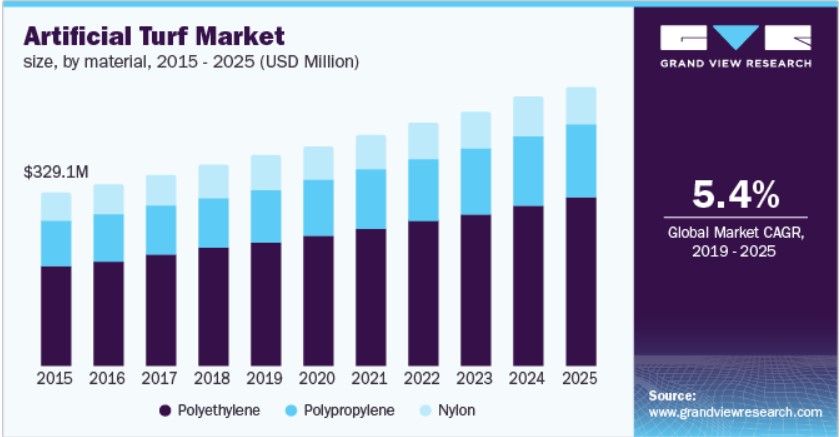
The first stage: The main material is nylon 6 (polycaprolactam), which is drawn and inserted into the base fabric. Carpet-like, poor elasticity; expensive.
The second stage: It is mainly made of polypropylene (pp) material, which is also extruded and drawn into the base cloth. After paving, it is filled with quartz sand particles. The hardness is high, but the price is cheap.
The third stage: It is mainly made of polyethylene (PE) material, which is also made of extruded wire and inserted into the base cloth. After paving, it is filled with quartz sand and rubber particles. It has the elasticity of natural grass and has great sports performance. for improvement;
The fourth stage: Taking FIFA certification as the standard, focusing on the construction of system engineering such as foundation and construction. In this stage, in addition to mesh products, there are also straight and curved products. The materials are pe and pp mixed, pe and nylon are mixed, Sports performance is further enhanced.
The fifth stage: mainly monofilament grass, in addition to the pursuit of sports performance, but also the pursuit of a more ideal appearance, while paying more attention to the construction of the system.
The sixth stage: mainly curly grass, a sports and leisure grass specially tailored for noble sports such as gate courts and golf. The development of artificial grass is accompanied by more and more people who truly experience the fun of sports.
Artificial grass has a low penetration rate and has a broad space for medium and long-term growth. At present, the penetration rate of artificial turf is still low:
1) The penetration rate of sports grass is less than 10%: Taking the artificial grass used in football fields as an example (accounting for 62% of artificial sports turf), the paved area of artificial turf in global football fields in 2017 was about 87 million square meters, corresponding to the number of football fields of about 1.2 It is estimated that the number of football fields in the world is more than 150,000, and the corresponding penetration rate of artificial turf football fields is less than 10%. At present, professional leagues still use natural turf, but given the significant cost advantage of artificial turf in maintenance, the proportion of artificial turf used in general events, campus sports fields, social sports fields and training grounds is expected to continue to increase.
2) The penetration rate of recreational grass is less than 3%: According to Euromonitor, the global home gardening market size (including lawn and other household outdoor plants) was US$27 billion in 2019, assuming that lawn accounted for 50% and household demand accounted for 50% of the total demand for recreational grass. %, the penetration rate of artificial turf in family turf is less than 3%. The improvement of product performance, the broadening of application scenarios, and the cultivation of consumer habits will drive the penetration rate of recreational grass to increase.
The overall demand for the global artificial turf market is growing rapidly. According to the statistics of AMI Consulting, the global artificial turf sales amount in 2019 was 17.8 billion yuan (converted at the exchange rate of 1 euro to 7.73 yuan), and the sales volume was 297 million square meters. From 2015 to 2019, the compound annual growth rate of global artificial turf sales was 14.83%. From the perspective of product structure, the sales volume of sports grass exceeds that of leisure grass, but the growth rate of leisure grass is faster. In 2019, the global sales of sports grass was 160 million square meters, accounting for 53.97% of global sales, and the compound annual growth rate from 2015 to 2019 was 8.72%. According to the forecast of AMI Consulting, it is expected that the global sales of sports grass will reach 219% in 2023. million square meters. In 2019, the global sales of recreational grass was 137 million square meters, accounting for 46.03% of global sales, and the compound annual growth rate from 2015 to 2019 was 24.91%. According to the forecast of AMI Consulting, it is estimated that the global sales of recreational grass will reach 239% in 2023. million square meters. (The above data comes from the network Yiyi Investment Research)
Raw material floating, yarn function, yarn weight, and management cost make up the factory cost of artificial grass.
Artificial turf is composed of three parts: grass yarn, adhesive and base fabric. The main raw materials are plastic particles, masterbatch, base fabric and raw rubber, all of which belong to the petroleum and petrochemical industries. The fluctuation of raw materials will affect the price.
Artificial grass yarn has different functions such as anti-static, flame resistance, antibacterial, anti-UV/UA, anti-aging, etc., so the price is different.
The weight of artificial grass yarn means the amount of material, and the weight of grass yarn is composed of density, grass height and dtex. The higher the density, the higher the grass height and the higher the dtex, the higher the price.
The cost of artificial grass is also affected by factory production management and company market operations.
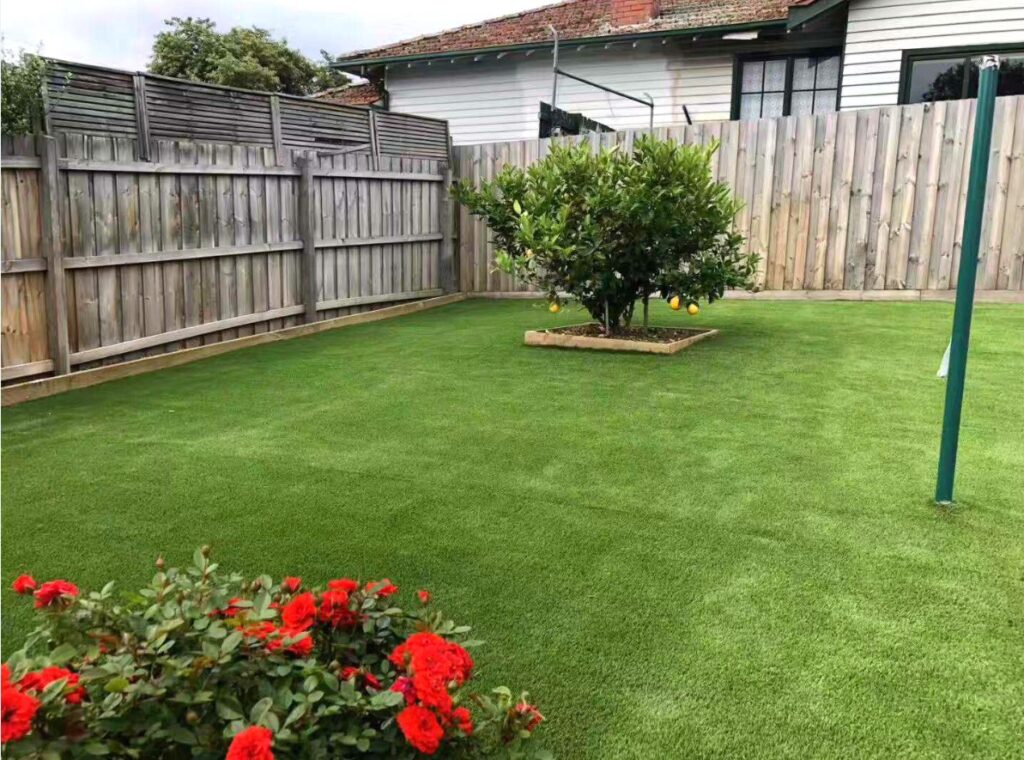
The cost of using artificial turf is much lower than that of natural turf. The price of one-time input of natural turf is low, but the cost of daily maintenance is high; the cost of artificial turf is high in the early stage, but it can be used for a long time with one input.
Considering the cost of daily maintenance, its total cost is much lower than that of natural turf. The local cost advantage is particularly obvious.
However, after considering the follow-up maintenance costs, the total cost of high-quality artificial turf is less than half of that of natural turf. The low maintenance cost and other benefits of artificial grass are as follows
Save water
just an occasional rinsing of dust
Real grass needs watering, and water is a precious resource all over the world
and we need to conserve water, especially in summer
artificial turf is that it obviously doesn’t require water
Low maintenance
Lawns need to be mowed, watered, weeded and fertilized, and artificial turf can reduce the time and effort involved in this
those who don’t want to spend time and money on lawn care. Sowing, mowing, weeding, fertilizing, etc
little maintenance and year-round green appearance
Durable
UV protection
Good abrasion resistance and noise reduction
Artificial grass can last for many years with proper installation and maintenance
And the color of artificial grass will not fade over time.
Wide applications
high-traffic areas
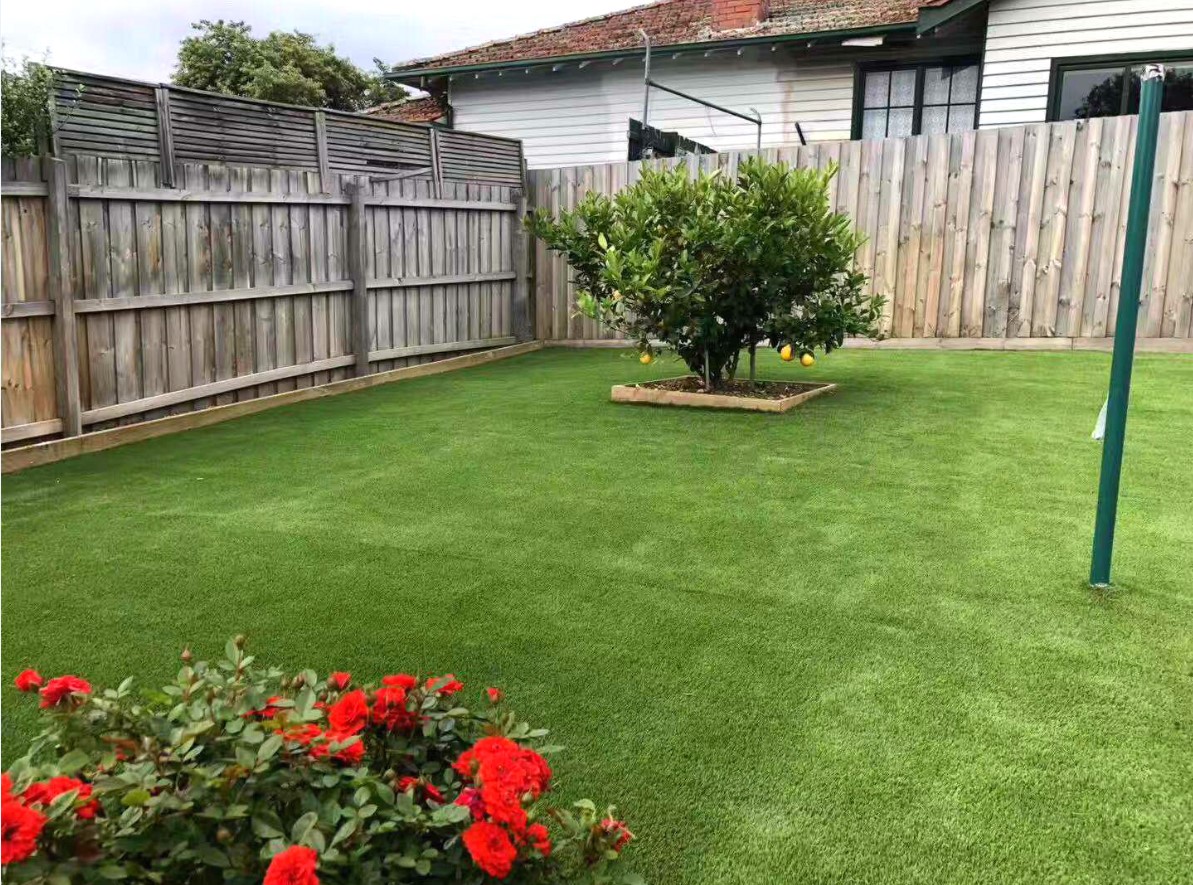
residential landscaping
commercial landscaping
dog walks
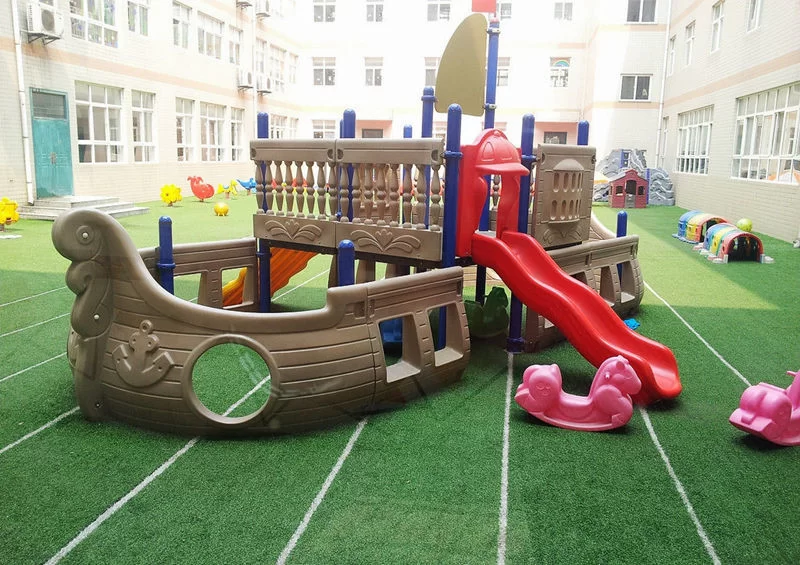
playgrounds.
and more.
Safety
surface for children and pets to play
Free of heavy metals, it’s also slip-resistant and doesn’t absorb heat like natural grass
pets and children can play on the water without obviously being damaged by your pet’s paws
walk with artificial turf installed, you don’t have to worry about getting mud
Performance
Good elasticity
The surface has shock absorption performance
Excellent traction
athlete can accurately judge the direction of movement of the ball
Suyi
Ted
Kiki
Get Your FREE Turf Sample & Quote Today – Experience Quality Before You Buy!