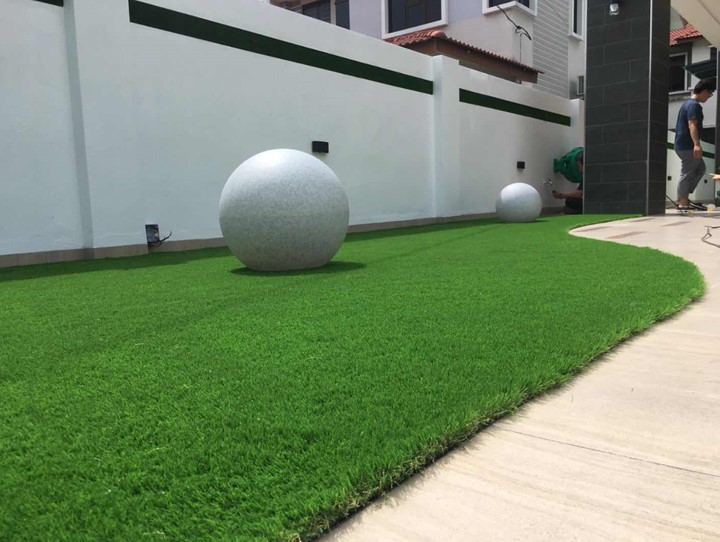
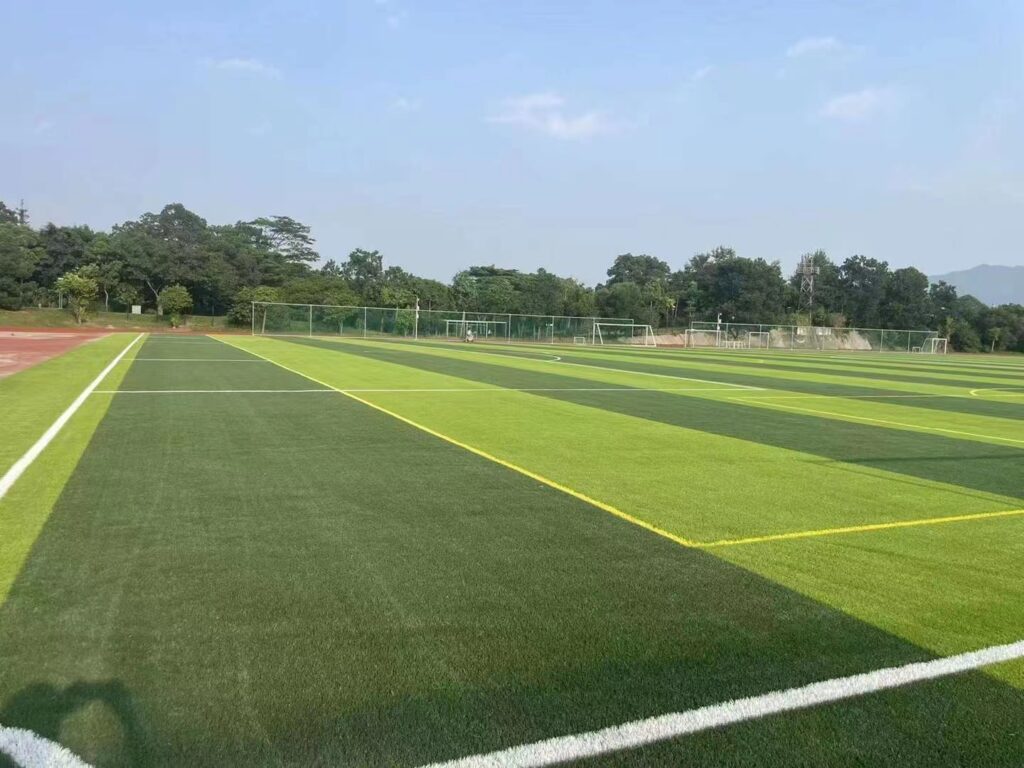
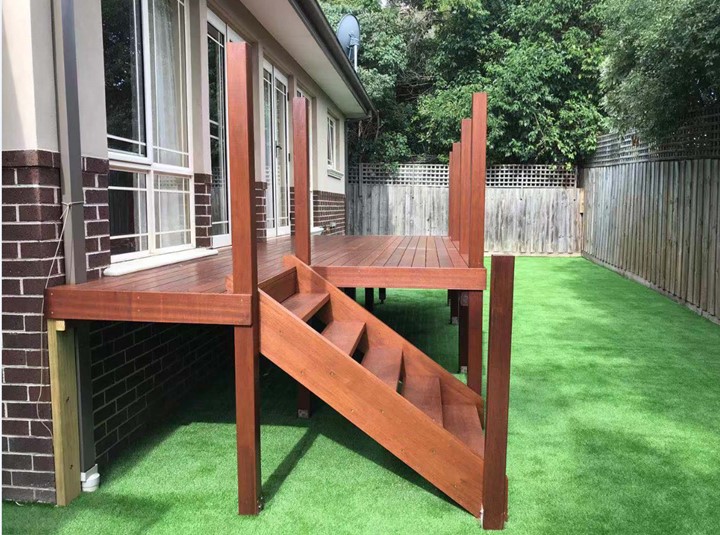
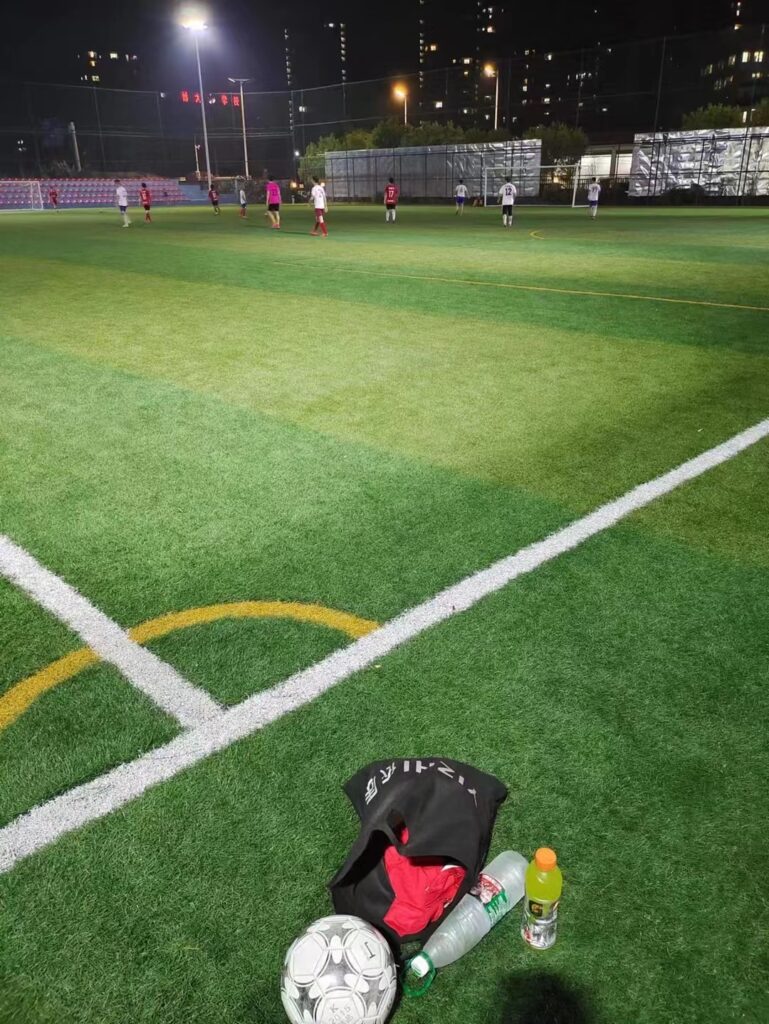
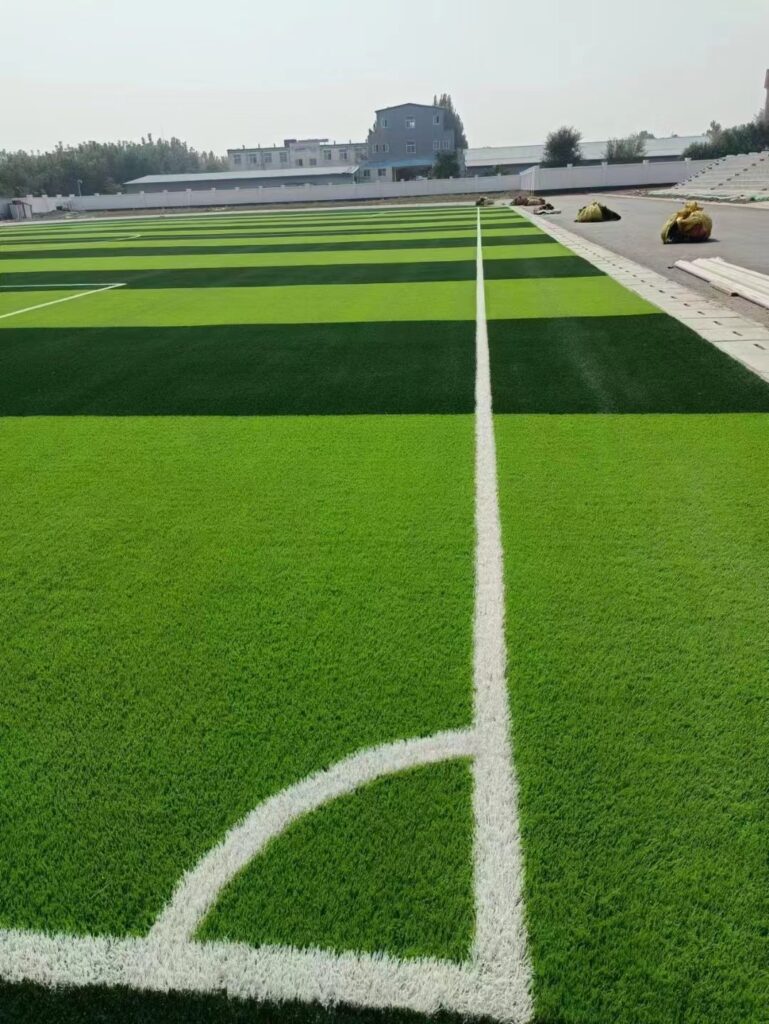
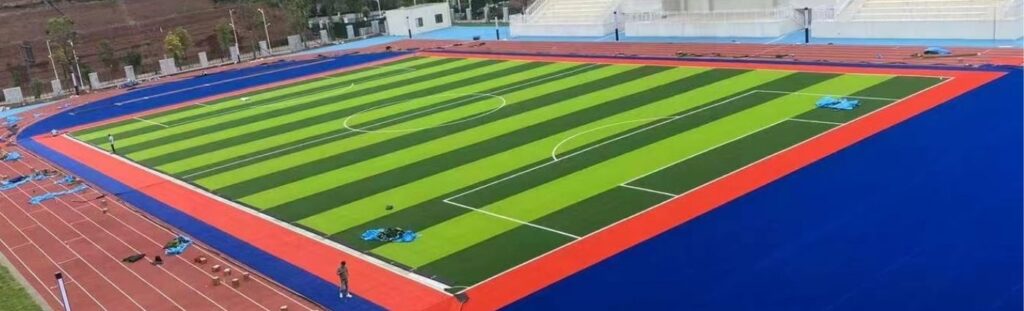
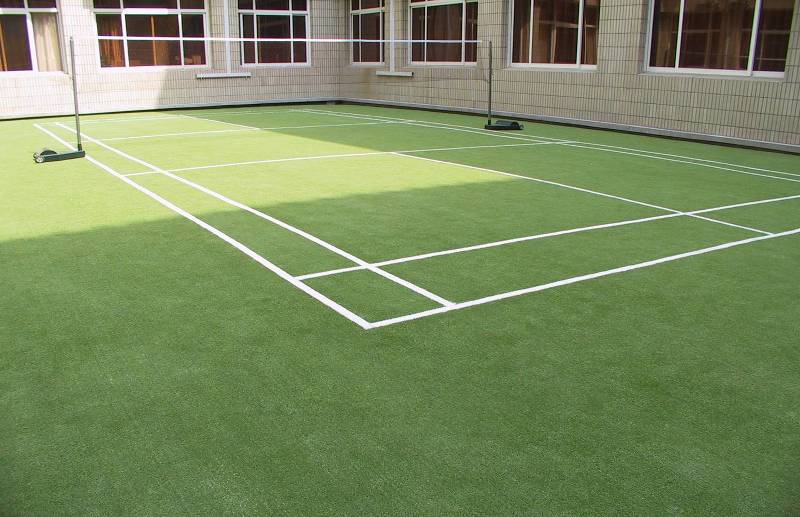
We can often see artificial turf in football fields, school playgrounds, indoor and outdoor landscape gardens. Do you know the difference between artificial turf and natural turf? This article talks about.
The difference between artificial turf and natural turf
Weather resistance: The use of natural lawns is easily limited by seasons and weather, and natural lawns cannot survive in cold winters or adverse weather. Artificial turf can adapt to various weather and climate changes. Whether in cold winter or hot summer, artificial turf can be used normally. It is less affected by rain and snow and can be used 24 hours a day. The artificial turf produced by Maddie has been certified by professional testing institutions, and the artificial turf products can be used normally under the temperature conditions of 60℃ to -40℃.
Durability: Sports venues paved with natural lawns are usually put into use after 3-4 months of maintenance after the lawn is planted. The general service life is between 2-3 years, and can be extended to 5 if the maintenance is strong -6 years. In addition, natural grass silk is relatively fragile, and it is easy to cause damage to the turf after being subjected to external pressure or friction, and the recovery is slow in the short term. Artificial turf has excellent physical wear resistance and is durable. Not only the paving period is short, but also the service life of the site is longer than that of natural turf, usually within 5-10 years. Even if the artificial turf site is damaged, it can be repaired in time. , will not affect the normal use of the venue.
Economical and practical: The cost of planting and maintenance of natural turf is very high. Some professional football fields that use natural turf have a high cost of turf maintenance every year. The use of artificial turf can greatly reduce the later management and maintenance costs, and the maintenance is simple.
Safety performance: Natural turf is a natural growth, and the friction coefficient and sliding property cannot be controlled when moving on the turf, while artificial turf can be controlled through scientific ratios and special production processes during production. The density and softness of the product can be more suitable when used, and the shock absorption effect and cushioning force are better, which can ensure that people are not easy to be injured when exercising, and it is not easy to cause fire. In addition, the surface layer of artificial turf can be recycled and reused, and the environmental protection performance is excellent.
Nowadays, people have improved the quality of artificial turf to be the same as that of natural turf, and even surpass natural turf in some aspects. In terms of appearance, artificial turf will be more and more close to natural grass, and its integrity and uniformity will be better than natural grass, but it is inevitable that they differ in ecological benefits. The ecological function of natural turf to adjust the microclimate and transform the environment cannot be replaced by artificial turf, but with the development of artificial turf technology in the future, we can believe that artificial turf and natural turf will continue to play their respective advantages, learn from each other and combine each other. In this context, the artificial turf industry is bound to usher in a broader development prospect.
Artificial turf was born in the United States in the 1960s, introduced to China in the late 1980s, and was not widely promoted until the mid-to-late 1990s. After a long period of development, artificial grass technology has become relatively mature, and many technical indicators are close to natural grass. Whether artificial turf is used as a landscape decoration or a sports field, anti-aging is one of its most basic requirements.
Commonly used artificial turf generally has a service life of 6-10 years. In the process of long-term use, artificial turf will inevitably appear aging. Although the aging of artificial turf is uncontrollable, we can still use some methods to judge whether artificial turf is aging in advance, and prolong its service life and duration as much as possible. Here, I will share with you the four major phenomena of artificial turf aging.
The degree of abrasion of the grass fiber
Artificial turf sites will cause wear and tear of artificial turf filaments during long-term use, and the filament fibers will more or less have some bifurcation and splitting phenomena, and even fall off in serious cases, especially when the frequency of use is high. The most obvious school playground, high-intensity competition and long-term use, greatly shorten the service life of artificial turf. Therefore, when purchasing artificial turf, we must choose products with good quality grass and excellent wear resistance, which can reduce the wear consumption of grass to a certain extent, avoid the loss of grass fibers and cause lawn replacement, and reduce economic losses.
The problem of fading and fading of grass silk
There are several reasons for the discoloration of artificial turf grass fibers:
1. The quality of grass silk fibers is unqualified, such as caused by anti-aging agents and poor production technology;
2. Environmental factors, such as strong ultraviolet radiation in some areas, acid rain corrosion, industrial pollution etc.;
3. The quality of the filling materials pollutes the lawn and causes the grass fiber to fade and fade.
Corrosion at the bottom of artificial turf
The bottom of the artificial turf is made of PP material. The football field located outside is relatively easy to crack after being exposed to wind, sun and rain. In addition, the overall drainage of the foundation of some sites is not smooth, and the bottom is soaked in water for a long time, which will cause the corrosion of the bottom of the artificial turf and accelerate the aging of the artificial turf.
Lawn seams become loose
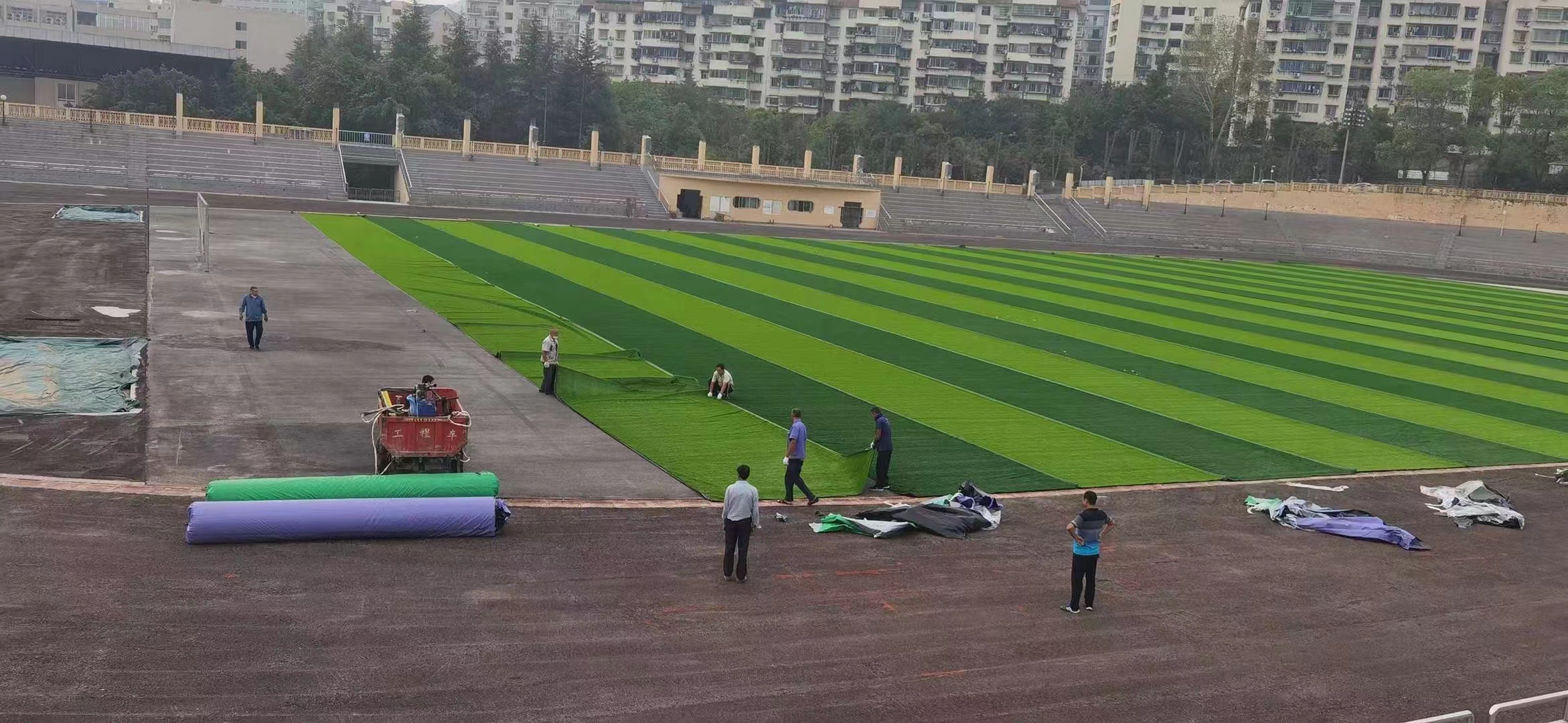
As we all know, artificial turf is not a complete piece of lawn, but is made of artificial turf spliced, and then paved with special artificial turf glue. Therefore, when paving artificial turf, you must find a professional construction team, and use high-quality special artificial turf glue to bond, otherwise it will easily cause the white lines and joints to become loose or disconnected. If properly adhered, the joints should last as long as the artificial turf field.
As a domestic artificial turf and turf enterprise integrating R&D, production and sales, Mango Sports warmly reminds our customers that the construction of artificial turf in football fields should pay attention to the four major phenomena of aging of artificial turf in football fields mentioned in today’s topic. It can effectively increase the service life of artificial turf in the stadium:
1. The ambient temperature of the artificial turf construction site should be selected above 5°C for construction, and it is not suitable for construction in rainy days or during the rainy season, otherwise the bonding time will be too long. , causing the viscosity to drop.
2. Before the joints of artificial turf are bonded, check that the back of artificial turf and the ground are clean, dry and free of moisture.
The four major phenomena of the aging of artificial turf in football fields shared above are a warm reminder that it is very important to maintain the daily maintenance of football field turf.
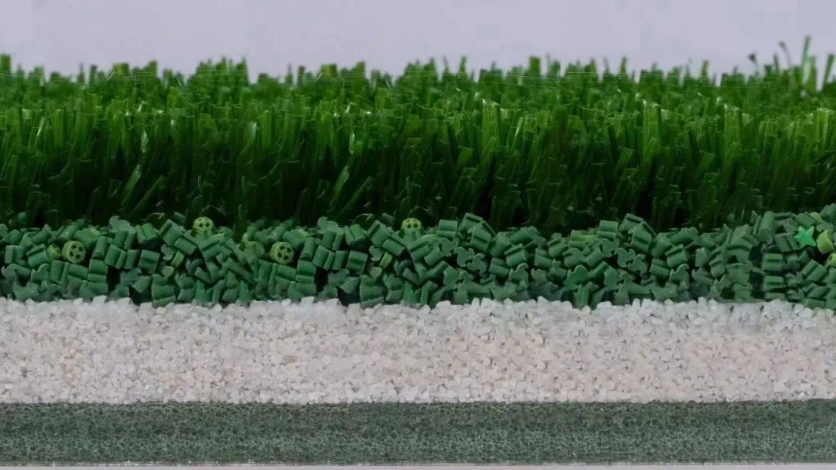
Artificial turf fields have appeared more and more and are used in people’s daily sports life. A complete artificial turf sports system is mainly composed of three parts: base layer, buffer layer and turf layer. The ground foundation is not only one of the most important links in the laying of the entire artificial turf, but also the carrier of the entire sports ground. The quality of the ground directly affects the performance and service life of the entire artificial turf sports ground. Therefore, we must pay attention to artificial turf. Infrastructure for lawn fields. The following briefly introduces some basic types that are currently used in artificial turf sports venues.
Cement concrete foundation
Flatness: The qualified rate of flatness is above 95%, and the error of 5-meter ruler is 3mm.
Slope: 3‰-4‰ of the central site, turtle-back drainage design. The curve should be 8‰, the straight road should be 5‰, and the semi-circular area should be 5‰. The surface should be flat, smooth and good drainage.
Strength and stability: The surface is uniform and firm without cracks, no rotten edges, and the seams are straight and smooth. Cut into pieces with a size of 6m × 6m. The cushion layer is compacted, and the density is greater than 95%. After being pressed by a heavy-duty roller compactor, it is ensured that the surface layer is free from loose floating soil and obvious wheel marks.
Waterproof layer: New PVC thickened water-proof film is used, the overlap should be 20cm, and the margin size should be greater than 15cm.
Warranty Period: The basic warranty period is 21 days.
Positioning: For accurate construction and line drawing needs, use firm and distinct markers to mark the lines of the site.
Asphalt foundation
Flatness: The qualified rate of flatness is above 95%, and the error of 3-meter ruler is 3mm.
Slope: horizontal <1%, vertical <1‰, high jumping area <4‰, the surface should be flat and smooth to ensure drainage.
Strength and stability: Asphalt materials should preferably use materials with no or little wax content. The base surface must be fully compacted to ensure smoothness without cracks, accumulation of rotten edges, and smooth and smooth joints.
Warranty Period: Basic Warranty Period 28 days.
Notoginseng lime soil foundation
Material ratio: The soil material should be cohesive fine-grained soil with a particle size of not more than 15mm, the sulfate content should be less than 0.8%, the organic matter content should be less than 10%, and the lime should be slaked lime powder with a grade of not less than III. After selecting qualified soil materials and lime, do a 3:7 lime soil compaction test, and the inspection quantity is inspected once every 5000m³ (heavy compaction), so as to control the construction quality.
Water content: The control of water content is a key link. Generally, the water content should be controlled at 20% to 23%, and the maximum should not exceed 24%. Before construction, parameters such as the control range of soil moisture content, the thickness of ash-laying soil, and the ramming and rolling variables should be reasonably determined according to the project characteristics, design compaction coefficient, soil types, and construction conditions.
The above foundations are suitable for the installation of artificial grass. Choosing the foundation for the appropriate project will help you complete the installation of the artificial grass sports field system.
With the development of the sports industry, the increasing integration of sports and education in schools, and the strengthening of people’s awareness of fitness, artificial turf sports fields have become one of the basic hardware for sports venues, sports parks, universities, middle schools, and even kindergartens. So how to create a high-quality artificial turf sports field? The quality of the site is not only related to the basic requirements such as the quality of the artificial turf itself, site slope, flatness, drainage, etc. but also has an inseparable relationship with the filling materials. In terms of site elasticity, friction, sports comfort, etc., the filling of accessories plays a crucial role.
Artificial turf-filling accessories generally refer to rubber particles and quartz sand. Accessories are the key elements of the artificial turf system. Its existence makes the establishment of system properties inevitable. At present, the most common practice in the world is to fill quartz sand and rubber particles, first filling the quartz sand, and then filling it with rubber particles.
According to the test report of FIFA, quartz sand is called stability infill, which is stability filler. Quartz sand is made of quartz and is mostly produced by washing and drying technology. It has the characteristics of high hardness, large specific gravity, uniform particle size, and small edges and corners. Since the artificial turf used in sports fields such as football fields is 40-60mm, the grass cannot be completely erected. Filling the quartz sand can not only stabilize the roots of the artificial turf grass but also make each artificial grass stand upright; The turf can also be weighted to effectively hold the turf in place without shifting. Rubber particles are performance infills, which are performance fillers, as the name suggests, ensure their sports performance. The artificial turf itself also has a certain thickness and elasticity, but in order to meet the needs of sports and to be closer to the sports effect of natural grass, it needs to be further filled with rubber particles to increase elasticity and absorb shock to prevent athletes from getting injured. The rubber particles are elastic. After filling, the rebound of the field can be better, which can minimize sports injuries and increase sports comfort. Sometimes in order to further achieve cushioning, another layer of cushioning pad is needed under the lawn. Of course, the specific filling amount should be calculated according to the needs of the site.
Rubber granules for artificial turf filling, EPDM granules, and TPE granules are commonly used in the mainstream. EPDM particles, the main component is EPDM rubber. EPDM rubber is a copolymer of ethylene, propylene, and a small amount of non-conjugated diene, which is a kind of ethylene-propylene rubber. EPDM rubber can resist ultraviolet radiation and general chemical reaction with its excellent performance, appropriate elasticity, good shock absorption performance, safety, and comfort. It can protect joints and ligaments and reduce the risk of injury. EPDM rubber granules are odorless, non-toxic, and environmentally friendly products. They are added with anti-mildew and antibacterial raw materials. They are non-flammable, stable and durable, anti-aging and resistant to acid rain, damp heat, and ozone, and are not easy to breed microorganisms. TPE particle is a new type of thermoplastic elastomer particle. Its raw material is a blend of the hydrogenated styrene-butadiene block copolymer, high polymer of ethylene and butene (POE), and other environmentally friendly polymer materials with excellent performance. It has the characteristics of high elasticity, wear resistance and anti-aging performance, high and low-temperature resistance, excellent sports performance, and environmental protection performance. It is a new high-quality auxiliary filler approved by FIFA artificial turf. An appropriate amount of rubber particles with high elastic properties are filled so that the artificial turf can effectively simulate the hardness of the soil ground, improve the surface elasticity and impact resistance of the artificial turf field, and prevent and reduce the damage caused by collision during the exercise process.
About the selection specification and filling ratio of filling materials
When artificial turf is filled with auxiliary materials, it is necessary to select qualified auxiliary materials according to the different types of sites and fill them in the correct proportion. If the field is filled randomly and blindly, not only will it not improve the sports performance of the artificial turf sports field, it may also reduce the service life of the field and cause injuries to players. In order to meet the mechanical properties of the court and at the same time play a role in protecting the athletes, it is necessary to purchase and fill in accordance with the specified standards.
The selection of quartz sand should be based on the following criteria: 1. The particle material is excellent, and the commonly used specifications are 40-60 mesh. In the actual construction of artificial turf sites, quartz sand with different specifications and meshes should be selected according to the type of site; 2. Particles are Uniform and round without sharp edges and corners, and the roundness is not less than 80%; 3. The surface of quartz sand is clean without dust and cracks, and has strong wear resistance and corrosion resistance; 4. The moisture content is less than 1‰.
Selection criteria of rubber particles: 1. Select environmentally friendly elastic rubber particles with dense rubber particles and high rubber content. According to the new national standard, the high polymer content is not less than 20%; 2. The particle size of the rubber particles is 1-3mm, which is a Triangular rhombus or regular shape; 3. Good particle material has good elasticity, is clean, and has no dust, the production process is shear type or extrusion type, with no oily rubber particles.
The filling depth of the auxiliary materials of artificial turf depends on the height of the turf and the performance required by the field. Generally, the height of the football field turf is between 40-60mm. According to the 50mm grass height used by the FIFA football field standard, the height of the filling materials is 3/4, that is, 36mm (about ±1mm), which is in line with the elasticity of the field to the football and the hardness of the surface. If it is a sports field of primary and secondary schools, accessories can be added appropriately, and it can even be equal to the grass silk. Therefore, not all sites have the same depth of filling materials, and they are filled proportionally according to different sites and grass silk heights.
The filling ratio of artificial turf accessories needs to be filled according to different types of sites. For sports with high impact strength, such as football fields, rugby fields, etc., the reference ratio of filling quartz sand and rubber particles is 40% quartz sand and 60% rubber particles, which can increase the cushioning performance of the court and reduce the sports injury of players. For sports fields with relatively small impact strength, such as tennis courts, gate courts, etc., the filling ratio can be reduced accordingly, and the field can be kept flat.
Precautions for filling construction with auxiliary materials
When filling the artificial turf sports field, the quartz sand and rubber particles must be filled in two layers and cannot be mixed. The bottom layer is filled with quartz sand and the surface layer is filled with rubber particles.
Quartz sand paving:
After the artificial turf is installed, evenly spread the quartz sand into the specified area according to the specifications of 4m*4m, and decide whether to wash the sand in layers according to the height of the grass silk;
According to the amount of sand designed in the plan, the amount of sand used is divided into layers and injected. After each spreading, the grass must be neatly combed and the quartz sand should be smoothed by a grass comb. keep grass seedlings upright;
The surface of the filled sand and colloidal particles is clean, filled with fullness, and there is no obvious unevenness;
Other impurities found in the filling should be removed immediately to ensure the construction quality;
When filling, the quartz sand, colloidal particles and the site should be kept dry to facilitate the flow and filling of the quartz sand colloidal particles evenly.
Paving of rubber granules:
After the quartz sand is laid, environmental protection particles can be laid;
The method of laying rubber particles is the same as the method of quartz sand. According to the designed dosage, it is injected in multiple times. Every time it is spread, it must be repeatedly combed with professional carding equipment to make the environmental protection particles fall fully and densely;
Any impurities found in the pavement must be removed immediately to ensure quality. Other impurities found in the filling need to be removed immediately to ensure the construction quality;
When filling, the quartz sand, colloidal particles, and the site should be kept dry to facilitate the flow and filling of the quartz sand colloidal particles evenly.
Notes
Unit: mesh, the so-called mesh refers to the particle size or thickness of the material. The general definition refers to the screen within the area of 1 inch * 1 inch, the material can pass through the screen, and the number of holes in the screen is defined as the mesh number. Such as 200 mesh, that is, the material can pass through a screen with 200 meshes within 1 inch * 1 inch. By analogy, the larger the mesh number, the finer the material particle size; the smaller the mesh number, the larger the material particle size. The sieving particle size is the size of the sieve holes that the particles can pass through the screen. Its specifications are 4-6 mesh, 6-8 mesh, 8-13 mesh, 10-20 mesh, 20-40 mesh, 40-70 mesh, 50-100 mesh, 70-140 mesh, 100-200 mesh, 300 mesh Eyes and so on.
Outdoor tennis court ground materials include acrylic tennis courts, artificial turf tennis courts, polyurethane plastic (PU) surface materials, etc. There are many types, each with its own advantages. Then, how to construct the outdoor tennis court ground of various materials, what are the requirements and characteristics?
Acrylic outdoor tennis court on the ground
Acrylic tennis courts are suitable for professional players’ competitions and training. Mainly water-based materials, fully comply with environmental protection requirements, have good wear resistance, are waterproof, sunscreen, non-slip, and can be laid on the surface of indoor and outdoor asphalt or cement foundation.
Adhesive layer: Coat a layer of special adhesive on the concrete base. The adhesive is a water-based epoxy resin that adheres tightly to cement surfaces and can be tightly combined with “series coatings” to prevent problems such as degumming and wrinkling.
Basic reinforcement layer: The coating made of acrylic emulsion does not contain asbestos, is mixed with quartz sand, and has the characteristics of good permeability and high strength. It can improve the strength, flatness, and service life of the site.
Filling layer: Lay the foundation of the acrylic color layer and quartz sand, and adjust the particle size and dosage of the quartz sand to control the speed of the ball.
Surface layer: Color UV-resistant acrylic topcoat is used to improve wear resistance.
Acrylic line paint: white line paint, strong coverage, easy to use.
Artificial turf tennis courts on the ground of outdoor
The advantage of artificial turf outdoor tennis court laying ground is that it can be directly laid on the concrete and hard sand ground without laying asphalt ground foundation. Simple structure, convenient maintenance, and long service life. Artificial turf is made of reinforced organic fibers, and its flexibility and elasticity are better than natural turf, and users can fully enjoy the sports feeling similar to natural turf.
Features of artificial turf tennis court surface products:
Low sliding resistance: Low sliding resistance, close to natural grass, effectively preventing people from scratching their skin and spraining their ankles when they move or fall.
Environmental protection: grass silk does not contain heavy metal pigments and can be used and recycled anywhere.
Wear resistance: It can be used at high frequency and has a service life of more than 10 years.
Weather resistance: suitable for various climatic conditions, high temperature, and cold resistance.
Anti-ultraviolet: It has good anti-aging and anti-ultraviolet performance, which can guarantee 8-10 years without fading or aging.
Polyurethane plastic (PU) tennis court on the ground
Polyurethane plastics can be laid on suitable asphalt and cement bases. The surface is also used as indoor and outdoor basketball courts, handball courts, volleyball courts, badminton courts, and other sports venues.
Features of polyurethane plastic products: good elasticity, wear resistance, non-slip, strong integrity, beautiful color, high flatness, easy maintenance, not affected by climatic conditions during exercise, can greatly reduce the degree of injury during exercise, and is conducive to growth of young people development. With certain toughness, it is very suitable for laying on the foundation of roofs and cracks and has certain waterproof properties.
Choose the tennis surface material that suits you according to your preference and objective situation.
Suyi
Ted
Kiki
Get Your FREE Turf Sample & Quote Today – Experience Quality Before You Buy!