Categories
Blog

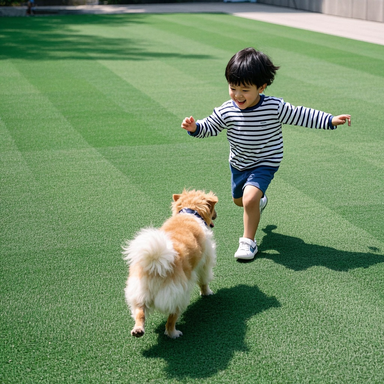
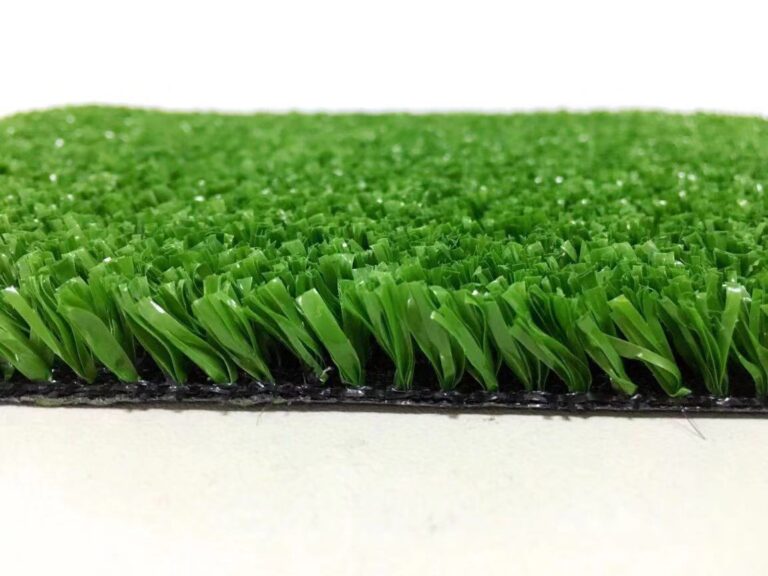
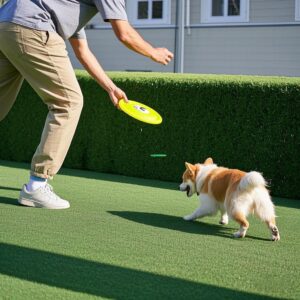
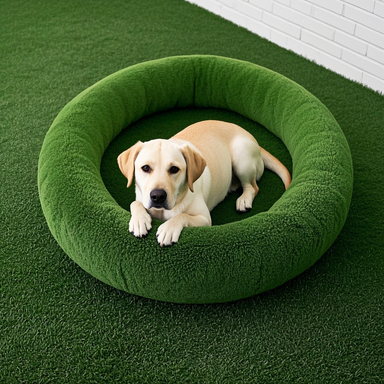
Best Artificial Grass for Pets

Best Artificial Grass for Pets: A Complete Guide by MANGO SPORTS

Discover the Perfect Turf Solution for Your Pets – Durable, Safe, and Low-Maintenance

Introduction

  • Brief introduction to MANGO SPORTS as a leading supplier of artificial grass.
  • Importance of choosing the right type of grass for pet owners.
  • Mention that this article will explore the best options for artificial grass for pets, focusing on durability, safety, and ease of maintenance.

Table of Contents

1.Why Artificial Grass for Pets?

  • Pet-Friendly Design: Discuss the rising popularity of artificial grass among pet owners due to its durability, cleanliness, and maintenance benefits.
  • Health & Safety Considerations: Emphasize the non-toxic materials and safe surface for pets, ensuring they are free from chemicals, pesticides, and allergens typically found in natural grass.
  • Convenience: Point out the low-maintenance nature of artificial grass, eliminating the need for regular lawn care (e.g., mowing, watering), making it ideal for busy pet owners.

2.Key Features of the Best Artificial Grass for Pets

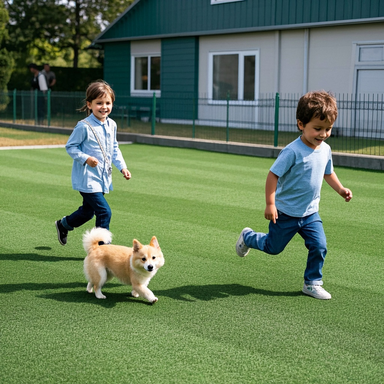
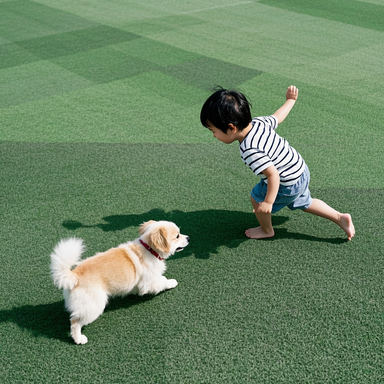
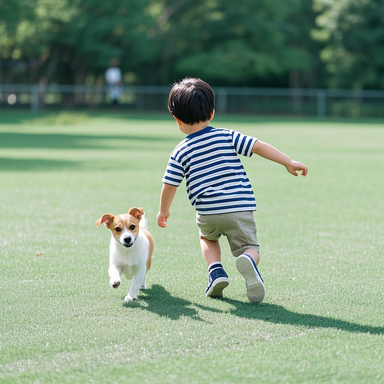
Durability: MANGO SPORTS’ artificial turf for pets boasts strong pressure resistance: the turf must be able to withstand continuous trampling by pets, especially high-intensity activities such as running and jumping by dogs. High-quality artificial turf should have high density and pressure resistance to prevent collapse or damage after frequent trampling.

• Resilience: Even after prolonged trampling by pets, the turf should have good resilience, meaning it should quickly return to its original shape after being stepped on, without deforming or collapsing, maintaining a natural appearance and comfort.
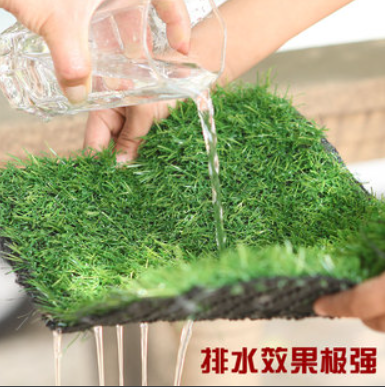
• Moisture and Water Resistance: Pet urine and humid weather conditions require a good drainage system to prevent waterlogging and odors. High-quality turf is typically designed with efficient drainage holes to ensure rapid water removal.

• Comfort and Softness: Focus on the soft texture of the grass, providing a comfortable surface for pets to play or relax on.
• UV Resistance: Since pets may spend long periods outdoors, lawns exposed to sunlight need to have excellent UV resistance. High-quality artificial turf for pets uses UV-resistant technology to ensure that the grass fibers will not fade or age due to prolonged sun exposure.

3.Benefits of Choosing MANGO SPORTS’ Artificial Grass for Pets

• High-Quality Materials:we use of premium polyethylene (PE) and polypropylene (PP) fibers, making the grass durable, soft, and safe for pets.
• Eco-Friendly and Non-Toxic: Emphasize the use of eco-friendly, recyclable materials that meet international safety and environmental standards, ensuring your pet’s health is never compromised.
• Innovative Manufacturing: we focus on research, design, and production of artificial grass, specifically tailored to meet the needs of pet owners.
• Custom Solutions: Mention that MANGO SPORTS offers customized options based on the specific needs of clients, including different pile heights, turf density, and color options.

4.How to Choose the Right Artificial Grass for Your Pets

  • Consider Pet Activity Level: Different types of artificial grass may be better suited for high-energy pets versus calmer pets. Provide guidance on choosing based on pet activity level.
  • Maintenance Requirements: Compare the ease of cleaning pet waste, the importance of a high-drainage turf system, and tips for keeping turf odor-free.

Conclusion

Choose premium artificial turf for your pet, focusing on comfort, durability, and low maintenance costs.

• MANGO SPORTS offers customized solutions to meet the needs of pet owners.

• Get a free consultation or quote from MANGO SPORTS today to start installing pet-friendly artificial turf.
Categories
Blog

How to understand the cost of artificial grass?

How to understand the cost of artificial grass?

Understanding What Impacts the Cost of Artificial Grass and How to Make Informed Decisions for Your Next Project.

Artificial turf is an increasingly popular choice for residential lawns, commercial landscapes, sports fields, and leisure spaces. It offers numerous benefits, including durability, low maintenance, and aesthetic appeal. However, when considering artificial grass for your next project, understanding the cost of artificial turf is crucial. 

This guide will provide you with detailed insights into what factors affect the cost, what you can expect to pay, and how to make cost-effective decisions for your turf installation.

Table of Contents

1.What Affects Artificial Turf Cost?

 The cost of artificial turf can vary significantly depending on several key factors. Understanding these elements will help you estimate the total cost of your project and make informed decisions.

1.1 Quality of Materials

The quality of the turf material plays a significant role in pricing. High-quality artificial grass made from durable materials such as polyethylene (PE) or polypropylene (PP) will generally cost more than turf made from cheaper materials. Turf with UV resistance, anti-fade properties, and high-density fibers typically falls into the higher price range.

1.2 Pile Height and Density

Artificial grass comes in various pile heights (the length of the grass fibers) and density (the number of fibers per square meter). Turf with higher pile heights and greater density tends to be more expensive but also provides a more natural look and feel. Higher density and pile height also contribute to better durability and performance, especially for high-traffic areas such as sports fields or public spaces.

1.3 Backing and Infill

The backing material and infill used in the turf also affect the price. Latex backing, for example, provides better flexibility and durability, while polyurethane backing is more robust and water-resistant but may cost more. Infill materials such as rubber, sand, or organic options contribute to the overall cost as well, with rubber infill typically being more expensive than silica sand.

1.4 Brand and Manufacturer

Different brands and manufacturers offer artificial turf at various price points. Well-established brands with a reputation for high-quality products and excellent customer service tend to have higher prices. However, investing in a reputable brand can ensure better product longevity, more reliable warranties, and stronger after-sales support.

2.How Much Does Artificial Turf Cost?

When budgeting for artificial grass, it’s essential to understand the average cost per square meter or square meter. The final price depends on the type of turf, the size of the area, and any additional services such as installation or infill materials.

2.1 Residential Artificial Turf Cost

In Mango sports,for residential lawns or gardens, the cost of artificial turf can range from $3 to $10 per square meter depending on the quality of the grass, the region, and any additional installation services. Below is a general breakdown:

  • Low-End Turf: Basic turf for low-traffic areas or budget-conscious projects can range from $3 to $4 per square meter.
  • Mid-Range Turf: Turf with a more natural look and feel, suitable for moderate use, typically costs between $4 and $6 per square meter.
  • High-End Turf: Premium turf with enhanced durability, density, and UV resistance can cost $6 to $10 per square meter.

2.2 Commercial Artificial Turf Cost

In Mango sports, for larger commercial projects like sports fields, playgrounds, or business parks, the cost of artificial turf is typically lower per square meter due to bulk purchasing. Prices generally range from $2 to $10 per square meter. Here’s a more specific breakdown for commercial applications:

  • Sports Fields: Turf for meterball, soccer, and other sports fields usually costs between $4 and $10per square meter, with added costs for infill materials and specialized installation.
  • Parks and Playgrounds: Turf for public parks or playgrounds can cost between $4 and $10 per square meter, depending on the desired aesthetic and level of traffic.

3.Additional Costs to Consider

In addition to the cost of the turf itself, several other factors contribute to the total cost of the project. These include:

3.1 Installation Costs

Professional installation can significantly affect the overall cost. Installation prices can vary depending on the complexity of the project, the region, and whether any additional preparation or underlayment is needed. Installation costs typically range from $2 to $8 per square meter, depending on the job.

3.2 Infill Materials

The choice of infill material adds to the overall cost. Infill is necessary for stabilizing the turf and providing cushioning, especially for sports fields. Common options include:

  • Rubber Infill: Common in sports fields, rubber is durable and provides excellent shock absorption, but it can increase the cost by $1 to $3 per square meter.
  • Silica Sand: This is a more affordable option, adding approximately $0.50 to $1 per square meter.
  • Organic Infill: Eco-friendly options like coconut fiber or cork can cost more but offer environmental benefits.

3.3 Underlayment

For improved drainage and a smoother finish, some projects may require underlayment. Underlayment typically costs between $2.5 and $5 per square meter, depending on the type and thickness of the material.

Artificial Turf Pricing by Application: Leisure, Sports, Pets, and Commercial Uses

This table breaks down the cost of MANGO SPORTS artificial turf based on different applications, helping you choose the right option for your needs.

ApplicationLow/ Mid- Range TurfHigh -End Turf
Leisure/Residential3-6USD/M26-10USD/M2
Pets 4-6USD/M26-10USD/M2
commercial2-6USD/M2 5-8USD/M2
Playground 3-6USD/M25-8USD/M2
Sports 3-6USD/M2 6-20USD/M2


Some application scenarios of artificial grass

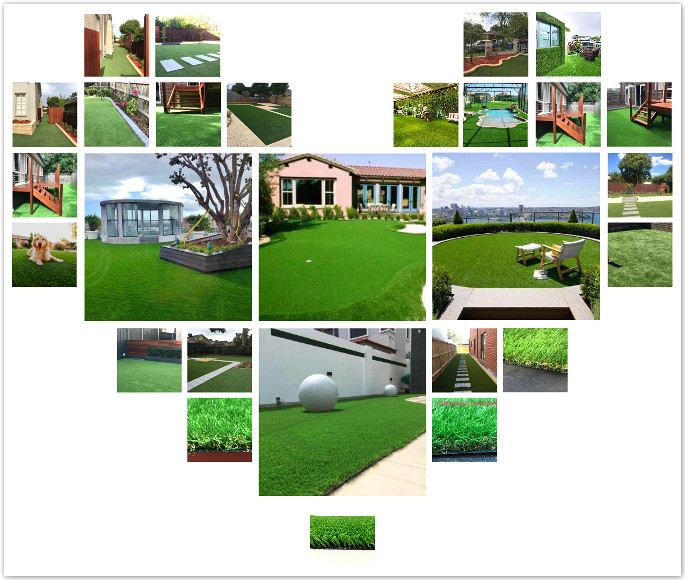
Artificial grass is versatile and suitable for various applications. For leisure areas like gardens and patios, it provides a low-maintenance, attractive solution. In sports, it offers durability and high performance for fields like soccer or golf. Pet-friendly turf is designed for safety and easy cleaning, while commercial applications ensure durability and aesthetic appeal in high-traffic areas.

4.Long-Term Cost Considerations

While the initial cost of artificial turf may seem high, it’s important to consider the long-term savings. Here are a few factors to think about:

4.1 Maintenance Savings

One of the main advantages of artificial turf is that it requires minimal maintenance compared to natural grass. There’s no need for watering, mowing, or fertilizing, which can lead to significant savings over time. For instance, water bills can be reduced by as much as 60% in areas with limited water supply.

4.2 Durability and Longevity

With proper care, high-quality artificial turf can last anywhere from 15 to 20 years. This durability provides excellent long-term value, especially in high-traffic areas like sports fields or public parks. The longevity of artificial grass means you won’t need to replace it frequently, saving you money on ongoing maintenance or replacements.

4.3 Energy Savings

Because artificial grass requires no irrigation or chemical treatments, it can be a more sustainable option in terms of energy use, particularly for residential properties in drought-prone areas.

5.Is Artificial Turf Worth the Cost?

The cost of artificial turf can be higher than traditional sod, but the long-term savings and benefits it offers often outweigh the initial investment. With minimal maintenance requirements, water conservation, and durability, artificial turf is a cost-effective solution for residential lawns, sports fields, and commercial applications alike.

Before purchasing, it’s important to consider the quality of the turf, the installation costs, and the long-term savings. By doing so, you can make an informed decision that ensures you get the best value for your money.

Understanding Artificial Turf Cost: Key Factors and Insights for Suppliers and Project Managers

This guide provides valuable insights into artificial turf cost, helping potential clients understand what goes into the pricing structure. It highlights key factors such as material quality, installation, and long-term savings, offering a comprehensive resource for artificial grass suppliers, wholesalers, and project managers in the sports and leisure sectors.

Product List

📚 Related Guides You May Like

    Ask For Free Sample

    Categories
    Blog

    The Rise of Padel Tennis: Global Sports Trends and Artificial Turf Solutions

    The Rise of Padel Tennis: Global Sports Trends and Artificial Turf Solutions

    Padel tennis is the world’s fastest-growing racket sport, blending accessibility, fun, and community spirit. This article explores its global rise, court design standards, market trends, and the critical role of artificial turf in court construction. Discover how Mango Sports delivers FIP-compliant turf solutions for both indoor and outdoor padel facilities.

    Table of Contents

    1. The Origin and Global Surge of Padel Tennis

    Padel tennis, often described as a hybrid of tennis and squash, originated in the late 1960s in Mexico. Enrique Corcuera, the sport’s founder, created the first padel court by combining tennis striking with squash-like rebounds, forming a unique and accessible game.

    From its roots in Mexico, the sport spread rapidly to Spain and Argentina, where it became a recreational staple. Today, padel is booming across Europe, the Middle East, Latin America, and Asia. Cities like Dubai, Riyadh, São Paulo, and Singapore are embracing padel as a premium lifestyle sport.

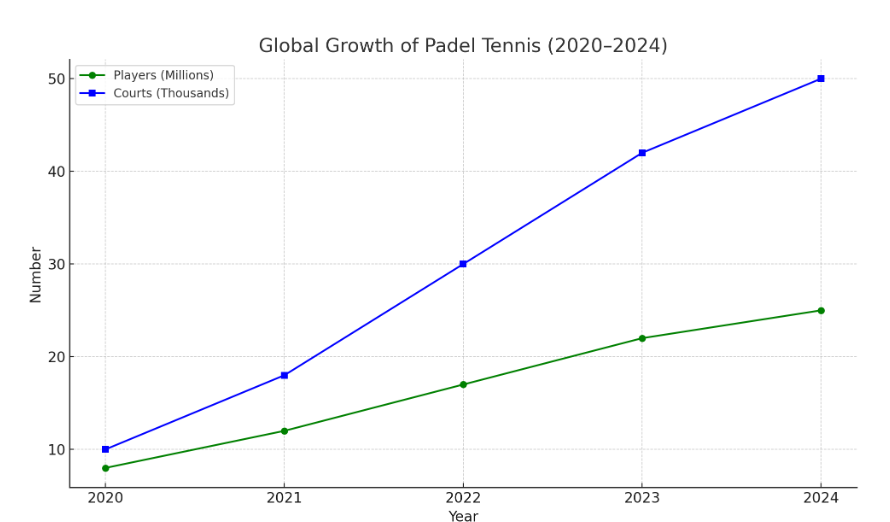
    📈 As of 2025, over 25 million players enjoy padel on 50,000+ courts worldwide, according to the International Padel Federation (FIP).

    Padel’s growing popularity fuels a multi-million-dollar industry spanning court construction, turf systems, and equipment manufacturing. The global padel market is projected to surpass $500 million by 2027, with a CAGR of over 12%.

    2. Padel Tennis Court Features and Market Insights

    2.1 Unique Design of Padel Tennis Courts

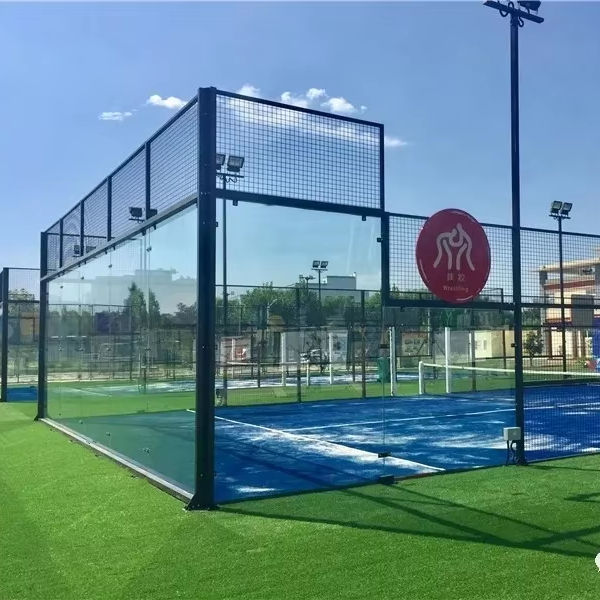
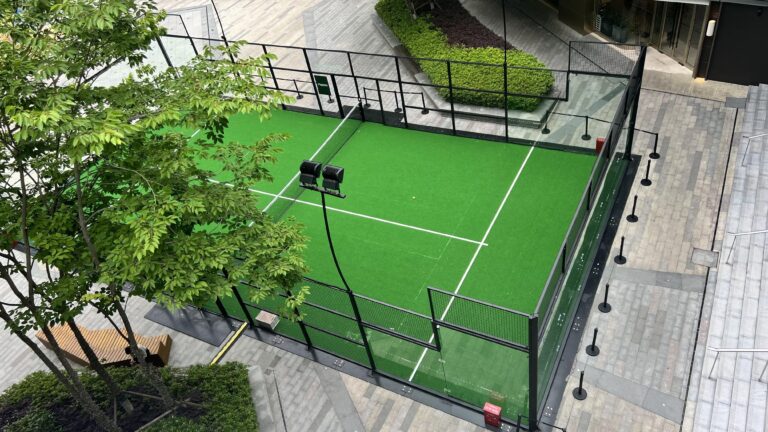
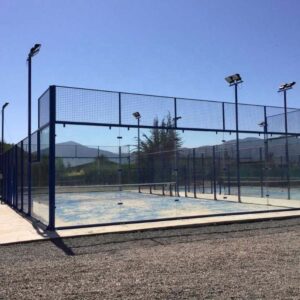
    A standard padel tennis court measures 20 meters by 10 meters, roughly one-third the size of a traditional tennis court. The court is enclosed by tempered glass walls and metal mesh fencing, typically 3 to 4 meters high. The glass walls add a strategic element, allowing players to use rebounds in gameplay, while also providing an excellent viewing experience for spectators. Matches are typically played in doubles format, emphasizing teamwork and fast-paced action, which enhances the sport’s social appeal. Padel’s rules are simple and easy to learn, making it accessible to players of all ages and skill levels. Compared to tennis, padel requires less physical intensity and slower ball speeds, reducing the risk of injury while maintaining a dynamic and fun playing experience. These characteristics make padel courts a popular addition to gyms, community centers, resorts, and luxury residential complexes.

    2.2 Market Insights: Why Is Padel Tennis So Popular?

    Several key factors drive the popularity of padel tennis:
    • Ease of Learning: Beginners can grasp the basics after just a few sessions, quickly integrating into matches.
    • Social Appeal: The doubles format fosters teamwork, making it ideal for social interactions among friends, family, or colleagues.
    • Low Injury Risk: With moderate physical demands, padel is suitable for players of all ages, from children to seniors.
    • Space Efficiency: The smaller court size makes it ideal for urban environments with limited space.
    • All-Weather Appeal: Indoor and outdoor court designs allow year-round play, regardless of climate.

    The rising demand has spurred a boom in court construction, particularly in regions like the Middle East and Asia, where padel is seen as a hallmark of a premium lifestyle. High-end clubs and resorts in cities like Dubai, Riyadh, and Singapore are increasingly incorporating padel facilities to meet growing customer interest.

    3. Why Is Padel Tennis Growing So Fast? Key Market Drivers and Insights

    3.1 Outdoor Padel Tennis Courts

    Outdoor courts are exposed to environmental factors such as UV radiation, rain, and temperature fluctuations. Therefore, artificial turf for outdoor padel courts must have the following features:

    • UV Resistance: High-quality turf should use UV-stabilized polyethylene (PE) or polypropylene (PP) yarns to prevent fading or fiber degradation from prolonged sun exposure.
    • Drainage Performance: Efficient drainage systems and porous backing ensure quick water runoff, minimizing downtime after rain.
    • Durability: Outdoor courts often see high usage, requiring high-density, wear-resistant turf to ensure a long lifespan.
    • Temperature Adaptability: In hot climates (e.g., the Middle East), turf should have heat-reflective properties to reduce surface temperatures. In colder regions, it must remain flexible to avoid brittleness.

    3.2 Indoor Padel Tennis Courts

    Indoor courts, while sheltered from weather, have their own set of requirements:

    • Consistency and Traction: Indoor courts need turf with consistent ball speed and bounce, along with excellent anti-slip properties to ensure player safety.
    • Shock Absorption: Indoor courts are often built on hard surfaces like concrete or asphalt, requiring additional shock-absorbing layers to reduce impact on players’ joints.
    • Durability: High-frequency use in indoor settings demands turf with superior wear resistance and resilience.

    3.3 Key Technical Parameters for Artificial Turf

    When selecting artificial turf for padel tennis, the following parameters are critical:

    • Pile Height: Padel turf typically has a pile height of 10-15 mm. Shorter piles provide faster ball speed and better control.
    • Yarn Type: Textured monofilament yarns are preferred for padel, offering optimal ball speed, grip, and reduced need for infill.
    • Density: High-density turf (over 20,000 stitches per square meter) ensures a smooth, durable surface.
    • Infill Material: Silica sand is commonly used as infill to enhance stability and optimize ball bounce.
    • Shock Pads: For indoor or high-intensity courts, shock-absorbing pads improve player comfort and safety.

    High-quality artificial turf enhances the playing experience, extends court lifespan, and reduces maintenance costs. The International Padel Federation (FIP) sets standards for turf performance, including ball speed, bounce height, and friction coefficient, which suppliers must meet.

    4. Indoor vs Outdoor Padel Tennis Courts: Choosing the Right Artificial Turf

    Mango Sports Co., Ltd. is a global leader in providing high-performance padel tennis court solutions, delivering FIP-compliant artificial turf and court components to clients worldwide. Our products are trusted by professional clubs, community centers, resorts, and private residences.

    4.1 High-Performance Padel Tennis Artificial Turf

    Our artificial turf is specifically engineered for padel tennis, offering:

    • Optimized Ball Speed and Grip: Precise pile design and infill systems ensure consistent ball speed and bounce.
    • Durability: Made with high-quality polyethylene yarns, our turf is UV-resistant and wear-resistant, ideal for high-traffic use.
    • Safety: Enhanced shock absorption and anti-slip properties reduce injury risks.
    • Low Maintenance: Efficient drainage and durable materials minimize upkeep costs.

    4.2 Comprehensive Court Construction Solutions

    In addition to artificial turf, we provide a full range of padel court construction materials, including:

    • Galvanized Steel Poles: High-strength and corrosion-resistant for robust court structures.
    • Tempered Glass Panels: 10-12 mm thick, meeting FIP safety standards and offering clear visibility for spectators.
    • High-Strength Chain-Link Fencing: Durable and easy to install, suitable for all climates.
    • LED Lighting Systems: Energy-efficient and uniform illumination for extended playtime.
    • Anchors and Accessories: Ensure secure installation across various ground conditions.

    4.3 Customized Services

    We understand that every padel project is unique. Our tailored services include:

    • Site Assessment and Planning: Designing optimal court layouts based on terrain, climate, and usage needs.
    • Material Supply: Providing FIP-compliant, high-quality materials for performance and safety.
    • Installation Support: Offering professional guidance or full construction services.
    • After-Sales Service: Maintenance advice and replacement parts to keep courts in top condition.

    5. Why Choose Mango Sports?

    Partnering with Mango Sports Co., Ltd. offers:

    • Global Expertise: Successful delivery of hundreds of padel projects across Europe, the Middle East, Asia, and Latin America.
    • High-Quality Standards: ISO-certified products that meet FIP requirements.
    • Customer-Centric Approach: Transparent pricing and professional support from consultation to completion.
    • Sustainability: Eco-friendly materials that minimize environmental impact while delivering top performance.

    6. Invest in the Future of Padel Tennis: Act Now!

    Padel tennis is more than a sport—it’s a lifestyle that fosters community, health, and fun. With its global popularity soaring, now is the perfect time to invest in a high-quality padel tennis court. Whether upgrading an existing facility or building a new one, Mango Sports Co., Ltd. offers comprehensive solutions to bring your vision to life.

    Visit www.groundturf.com today to learn more about our padel tennis court solutions. Contact our team for a free customized quote, product samples, or expert consultation. Let’s build a safe, professional, and vibrant padel court together and join the global padel revolution!

    FAQs

    Q1: What are the standard dimensions of a padel tennis court?
    A: A standard padel tennis court measures 20 meters in length and 10 meters in width. It is enclosed with tempered glass walls and metal mesh fencing, typically 3 to 4 meters high.

    Q2: What type of artificial turf is best for padel tennis courts?
    A: Textured monofilament turf with a pile height of 10–15 mm and high stitch density is ideal. It provides consistent ball speed, excellent traction, and low maintenance.

    Q3: Can artificial turf be used for both indoor and outdoor padel courts?
    A: Yes, but indoor and outdoor environments require different specifications. Outdoor turf must be UV-resistant and drainable, while indoor turf prioritizes shock absorption and consistent bounce.

    Q4: How long does artificial turf for padel courts typically last?
    A: With proper installation and maintenance, high-quality artificial turf can last between 6–10 years, depending on usage frequency and environmental conditions.

    Q5: How much does it cost to build a complete padel tennis court?
    A: The cost varies based on location, materials, and design. On average, a full padel court with turf, fencing, lighting, and glass panels ranges from $20,000 to $60,000 USD.

    Ask For Free Sample

    Categories
    Blog

    Pet-Friendly Artificial Grass: Applications, Configuration, and Maintenance

    Pet-Friendly Artificial Grass: Applications, Configuration, and Maintenance

    Want to give your pets a cleaner, safer, and more durable outdoor space—without the mess of natural lawns? Pet-friendly artificial grass is changing the game for homeowners, pet care businesses, and city dwellers alike. From mud-free play zones to allergen-free patios, synthetic turf offers a low-maintenance solution that pets love and owners trust.

    According to the American Pet Products Association (APPA), 66% of U.S. households owned a pet as of 2023, indicating a strong and growing market for pet-friendly landscaping solutions.

    Table of Contents

    Applications of Pet-Friendly Artificial Grass

    Artificial grass is incredibly versatile, making it ideal for a wide range of pet-related applications. Its durability, ease of maintenance, and pet-safe features have made it a popular choice in both residential and commercial settings.

    1. Residential Backyards and Dog Runs

    One of the most common uses of pet-friendly artificial grass is in home backyards and designated dog runs. Unlike natural grass, which can develop brown patches from pet urine or become muddy after rain, synthetic turf remains vibrant and mud-free. It provides a safe, comfortable surface for pets to play, roll, and rest without damaging the lawn. Homeowners appreciate the reduced cleanup, as pet turf eliminates muddy paw prints tracked indoors.

    🌟 Real-World Example: Homeowner Maria S. from San Diego shared: “Ever since replacing our patchy backyard with synthetic turf, my Labrador stays cleaner and happier. No more muddy floors!”

    2. Pet Care Facilities and Dog Parks

    Doggy daycares, boarding facilities, and public dog parks benefit significantly from artificial grass. These high-traffic areas require surfaces that can withstand constant use by multiple pets. Pet turf, such as K9Grass, is engineered with superior drainage and antimicrobial properties to ensure cleanliness and safety, making it ideal for veterinary clinics, pet relief areas at airports, and community dog parks.

    📊 Data Insight: A 2022 study by the TurfMutt Foundation found that artificial pet turf reduced maintenance costs by over 60% in commercial pet care environments.

    3. Balconies and Urban Spaces

    For pet owners in urban apartments or homes without yards, artificial grass transforms balconies, patios, or rooftops into pet-friendly oases. Its ability to be installed on hard surfaces like concrete or wood makes it a practical solution for city dwellers. Pet turf provides a soft, green space for pets to relax or relieve themselves, with easy cleanup and no mess.

    4. Training Areas

    Artificial grass is increasingly used in pet training facilities due to its durability and low maintenance. It creates a consistent, safe surface for obedience training, agility courses, or designated potty areas, helping to train pets to use specific spots for relief, which simplifies cleanup.

    🌟 Real-World Example: A dog training center in Austin, Texas, installed K9Grass in 2021 and reported a 40% reduction in surface-related injuries among pets within a year.

    📊 Visual Comparison: Natural Grass vs. Pet Turf

    FeatureNatural GrassPet-Friendly Turf
    Mud and MessCommon after rainNo mud or digging mess
    Odor ControlLowHigh (antimicrobial infill)
    DurabilityWeak under frequent useWithstands rough play
    Maintenance EffortHigh (watering, mowing)Low (brushing, rinsing)
    Pet SafetyMay harbor allergensHypoallergenic
    Year-Round UseSeasonalAll-weather ready

    Configuration Parameters for Pet-Friendly Artificial Grass

    Selecting and installing pet-friendly artificial grass requires careful consideration of several parameters to ensure optimal performance and longevity. Here are the key factors to consider:

    1. Material Quality and Safety

    High-quality pet turf should be made from non-toxic, lead-free materials to ensure safety for pets and children. Brands like Magnolia Pet Turf incorporate antimicrobial technologies, such as Microban®, to inhibit bacteria, mold, and mildew growth, reducing odors and enhancing hygiene. Always choose turf with UV-resistant fibers to prevent fading under sunlight.

    2. Pile Height and Density

    The pile height (blade length) and density of the turf affect both aesthetics and functionality. For pet applications, a medium pile height (1.5–2 inches) is recommended. A dense turf with a knitted backing, like K9Grass, ensures durability and prevents tearing from digging or rough play.

    3. Drainage System

    Effective drainage is critical for pet turf to handle urine and prevent odor buildup. A permeable backing and a well-prepared sub-base allow liquids to percolate quickly. Ensure the sub-base is compacted and sloped to direct water away from living areas.

    4. Infill Selection

    Infill materials, such as silica sand or antimicrobial Envirofill, helps keep turf fibers upright, adds weight for stability, and enhances hygiene. Pet-friendly infills like Envirofill are non-toxic and have antimicrobial properties. Avoid sharp sand.

    5. Installation Precision

    Professional installation is recommended. The process involves clearing the site, laying a compacted sub-base, securing the turf, and distributing infill. Proper installation prevents drainage issues, weed growth, and uneven surfaces.

    📘 Tip Chart:

    Pet TypeTurf Feature NeededProduct Suggestion
    Large DogsHigh durability, dense backingK9Grass Elite
    Small DogsSoft texture, easy drainagePetZen Turf
    Multi-Pet HomesOdor control, antimicrobialEnvirofill + Microban

    Maintenance Practices for Pet-Friendly Artificial Grass

    While artificial grass is low-maintenance compared to natural lawns, regular care is essential to keep it looking pristine and hygienic.

    1. Regular Debris Removal

    Remove leaves and debris weekly using a leaf blower or broom. This maintains drainage and prevents bacteria or moss.

    2. Pet Waste Management

    Remove solid waste promptly. Rinse urine areas weekly. Use pet-safe enzymatic cleaners or vinegar-water solutions (1:1 ratio).

    3. Brushing and Fluffing

    Brush high-traffic areas every few months to keep fibers upright and redistribute infill.

    4. Spot Cleaning and Stain Removal

    Address spills immediately with water or mild detergent. Freeze gum for removal. Test cleaners before full use.

    5. Seasonal and Deep Cleaning

    Rinse monthly in dusty or rainy regions. Deep clean annually with a turf-safe pressure washer. Replenish infill as needed.

    Environmental Impact and Sustainability

    Modern artificial grass systems are increasingly eco-conscious. Recyclable backings, lead-free materials, and reduced water use make pet turf a sustainable option. A 500-square-foot synthetic lawn can save over 22,000 gallons of water annually, according to the EPA.

    FAQs

    Q: Can artificial turf get too hot for pets?
    A: Yes. Use shade elements or heat-resistant turf to reduce surface temperature.

    Q: Is artificial grass safe for pets with allergies?
    A: Yes. Hypoallergenic materials prevent pollen, mold, and dust buildup.

    Q: How long does pet turf last?
    A: With proper care, 5–10 years.

    Q: How to choose artificial grass for pets?
    A: Choose soft, non-toxic turf with good drainage and odor control. [Click Here]

    Product List

    Conclusion

    Pet-friendly artificial grass is a transformative solution for creating safe, durable, and low-maintenance environments for pets. Its applications range from residential backyards to commercial dog parks. By carefully selecting high-quality materials, configuring for optimal drainage and durability, and following a simple maintenance routine, pet owners can enjoy a lush, green lawn that stands up to the demands of their furry friends.

    With proper care, pet turf can last 5–10 years, providing a high return on investment and a cleaner, safer space. For those considering pet turf, consult with reputable suppliers or installers. Share your experiences or contact us to learn more about how synthetic turf can elevate your pet’s outdoor space!

    Ask For Free Sample

    Get Your FREE Turf Sample & Quote Today – Experience Quality Before You Buy!